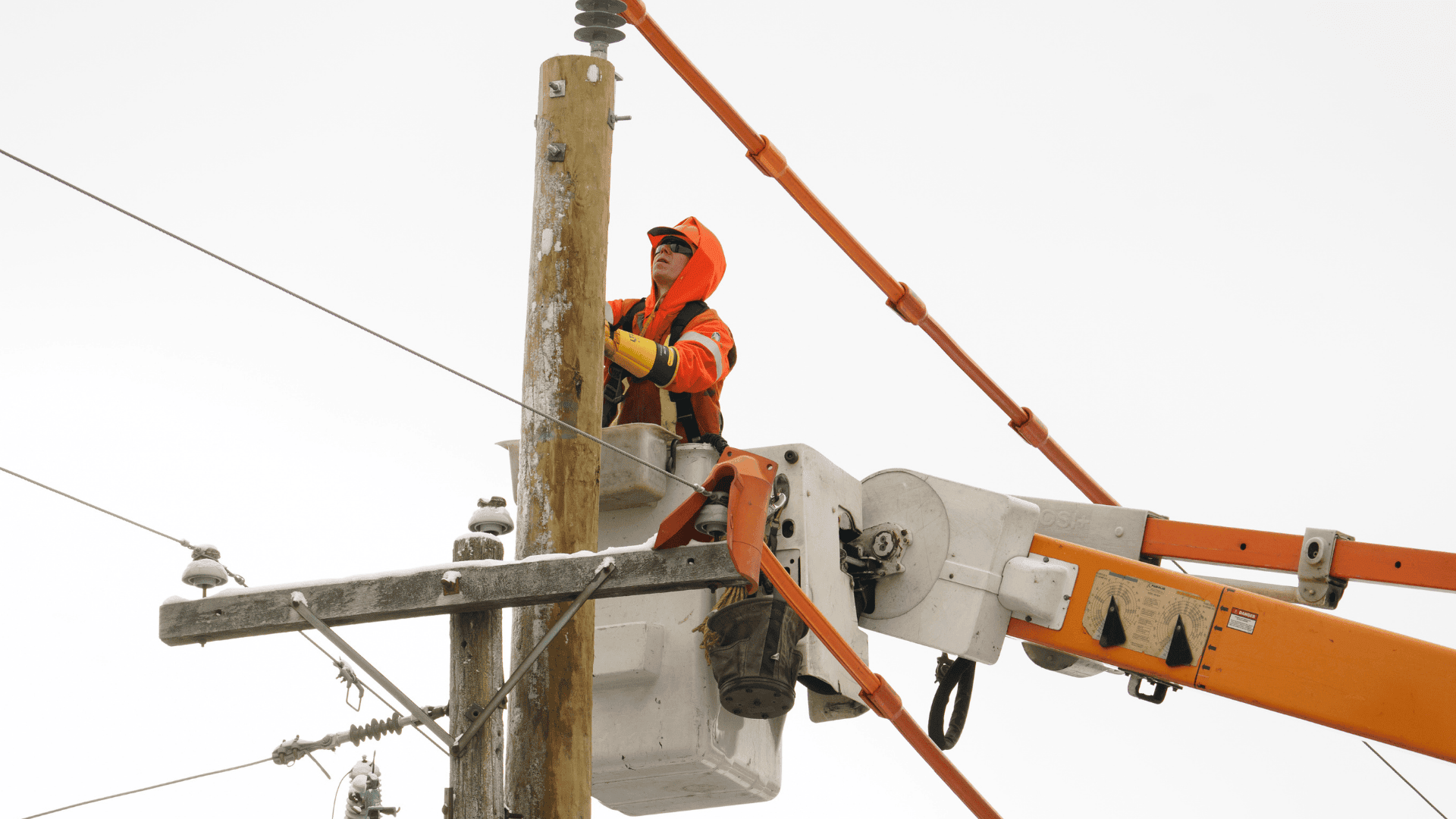
When your power goes out, our crews are ready to respond. Every outage is different, but our goal is always the same — to restore power safely, efficiently, and with as little disruption as possible. The steps below outline what happens behind the scenes to bring your power back.
Home Outages & Safety Outage Centre Restoration Process & Updates
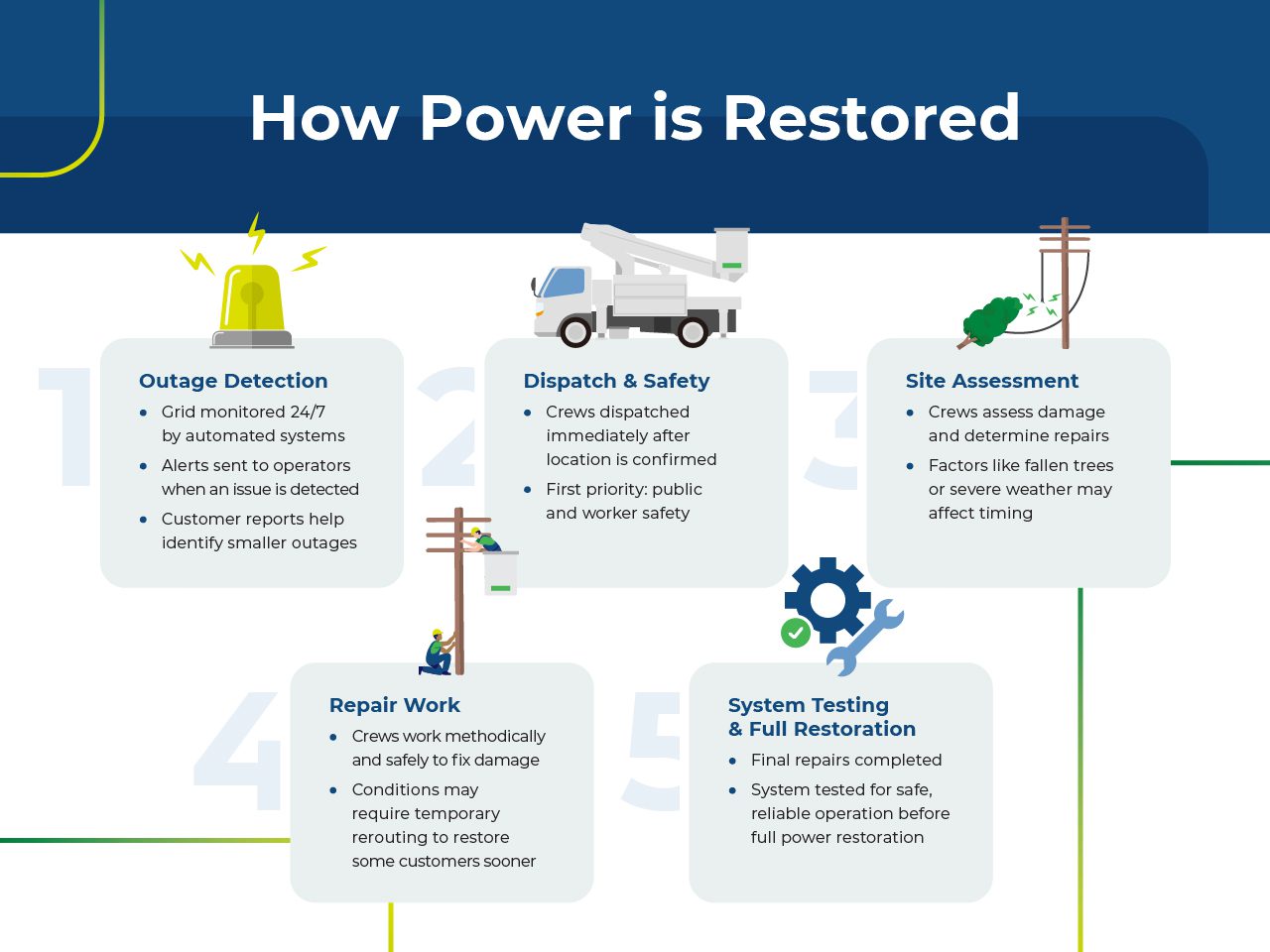
How Power is Restored
1. Detecting an Outage
Our systems monitor the power grid 24/7 and alert operators the moment an outage or issue is detected. Automated technology helps identify the affected area and potential cause. In some cases, smaller or localized outages may not trigger an alert right away, so customer reports play an important role. If your power goes out, you can help by reporting it online or by phone.
2. Sending Crews
Once the location of the outage is confirmed, our crews are immediately dispatched to investigate. Their first priority is safety — both for the public and for our team. When they arrive, crews assess the site, identify the cause, and determine what repairs are needed. Factors like fallen trees, damaged lines, or severe weather can make restoration work more complex and may affect timing.
3. Keeping You Informed
We know being without power is disruptive, and clear communication matters. Updates are shared through our outage map, outage notifications, and X. These updates include the affected area, the number of customers impacted, and an estimated restoration time. As our crews assess the situation and make progress, we continue to update this information, so you always have the latest details.
4. Restoring Power
Our crews work methodically and safely to repair damage and restore service as quickly as possible. When conditions allow, we may temporarily reroute power to bring some customers back online while permanent repairs are completed. Once work is finished, power is safely restored to affected customers.
5. Learning From Every Outage
After power is restored, we review the event to understand what happened and how we can improve. Data from each outage helps us identify trends, strengthen our infrastructure, and plan system upgrades. We also use this information to guide maintenance activities like tree trimming — helping to reduce the risk of future outages and improve reliability for everyone.
Outage Priorities During Multiple Outages
When large or multiple outages occur, we follow a clear process to restore power safely, efficiently, and in order of priority.
Restoration begins with hospitals, emergency services, and other critical infrastructure. Crews then repair main feeders, substations, and major roadways that serve the greatest number of customers, before moving to smaller neighbourhoods and individual outages. Throughout the process, safety remains our top priority, and our crews work around the clock to restore power to every customer as quickly and safely as possible.
Understanding Estimated Time of Restoration (ETR)
We do our best to provide accurate restoration times, but there are situations where an ETR may not be available right away. This can happen when:
- The cause of the outage takes time to locate, especially with underground cables or widespread damage.
- Repairs are required outside our service area before local power can be restored.
- Emergency services must first secure the area for public safety.
- Weather conditions are not favourable.
Once the cause is confirmed, crews begin repairs and post updates to the Outage Map, including estimated restoration times. These may change as work progresses or as damage assessments evolve.
No matter the situation, our commitment is the same — to restore your power safely, efficiently, and with care for our community.
Causes of Outages
Power outages can happen for many reasons — most often due to severe weather. High winds, lightning, freezing rain, snow, or flooding can damage power lines and equipment. Strong gusts may bring down trees or branches, and ice buildup can add extra weight to lines and poles, causing them to break.
While weather is the most common cause, outages can also occur for other reasons:
Fallen Branches and Trees
Tree contact with power lines is a leading cause of outages, especially during storms. When this happens, protective equipment automatically shuts off power until crews can safely remove debris and make repairs.
Equipment Failure
Even with regular maintenance and inspections, electrical equipment can occasionally fail or malfunction, resulting in an outage.
Construction Damage
Excavation or construction work can sometimes damage underground or overhead cables, interrupting power to nearby customers.
Vehicle Accidents
Collisions involving poles and/or electrical equipment can cause damage that leads to temporary power loss.
Wildlife Contact
Birds, squirrels, raccoons, and other animals can sometimes contact power lines or equipment, triggering an outage.