Learn how to plant and maintain trees responsibly near electrical lines and equipment.
These important guidelines will help keep our community safe, ensure reliable power, and support a healthy environment for Burlington.
Home Outages & Safety Emergency & Safety Tree Planting & Trimming
Learn how to plant and maintain trees responsibly near electrical lines and equipment.
These important guidelines will help keep our community safe, ensure reliable power, and support a healthy environment for Burlington.
Property owners are responsible for all initial and ongoing tree trimming and brush removal around customer-owned electrical services.
For additional guidance or service requests, email: [email protected]
Your safety is our top priority. Before planting or trimming trees, shrubs, or vines, it’s important to choose the right location and maintain safe proper clearances. Doing so helps protect your property and keep your neighbourhood safe while supporting reliable electricity for everyone. Regular trimming is just as important as careful planting, ensuring that vegetation does not encroach on powerlines and minimizing risks such as outages, fire hazards, or electrocution.
For an easier and safer planting experience, be sure to review the necessary tree planting clearances before you begin. As trees get bigger, their branches might reach powerlines — especially during storms or windy days — which often causes outages. By planning carefully now, you can avoid future issues and help keep your family and community safe.
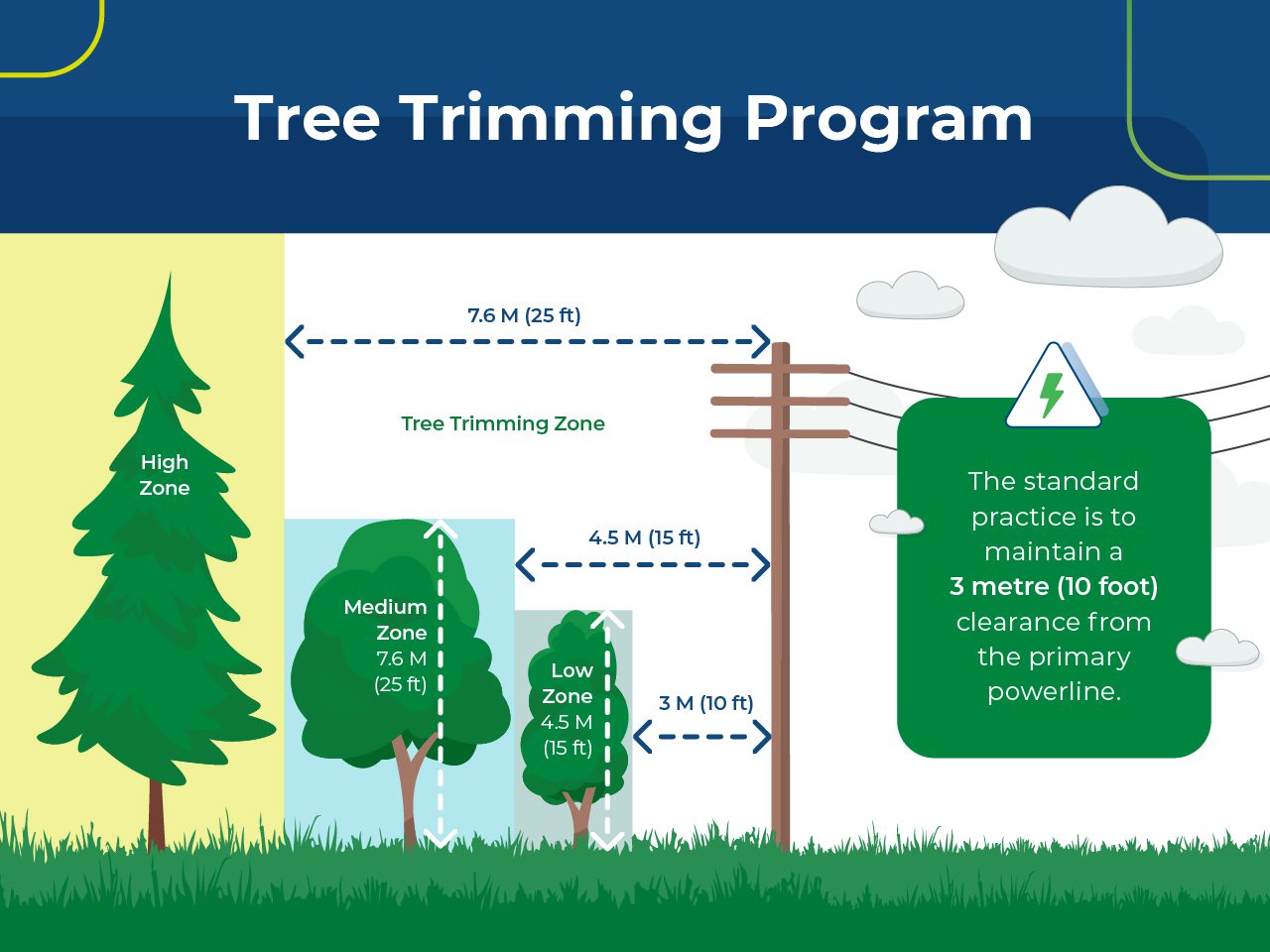
For easy reference, we’ve illustrated all clearance requirements in Table 1 and Figure 1. When choosing plants, keep in mind that species that grow quickly need extra attention and should be planted farther from overhead wires so they remain safe as they grow and mature.
It is essential to maintain a minimum distance of three metres (10 feet) between all trees, shrubs, and vines and the base of any electrical pole. Do not plant or allow vegetation within this area to ensure the safety of your property and the reliability of electrical service. If you have any questions or need guidance, our team is always here to help – contact us.
The three tree planting zones are outlined in this table.
| Zone | |
|---|---|
| Low | Trees and shrubs planted under electrical lines should have a maximum mature height and spread of 4.5 metres (15 feet). |
| Medium | The maximum mature height and spread of trees planted from the outer edge of the Low Zone in all directions, is 7.6 metres (25 feet) from overhead lines. |
| High | The High Zone extends from the outer edge of the Medium Zone, and measures 7.6 metres (25 feet) from the overhead lines. At maturity, trees planted in this zone should not encroach on the Medium Zone. |
Three Tree Planting Zones – High, Medium and Low – The maximum heights and clearances required from electricity poles and wires are illustrated. The zones and applicable clearances are outlined in Table 1.
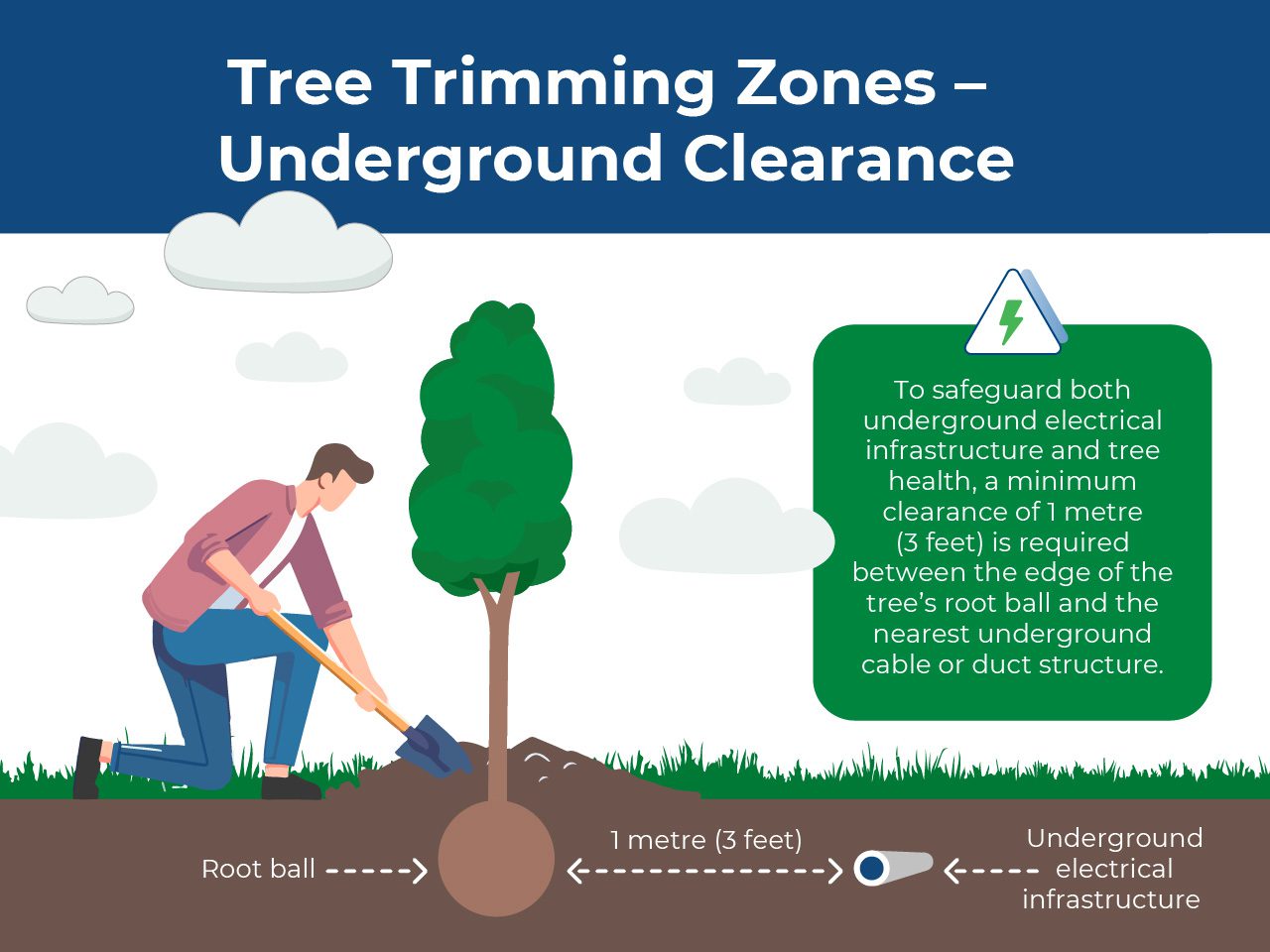
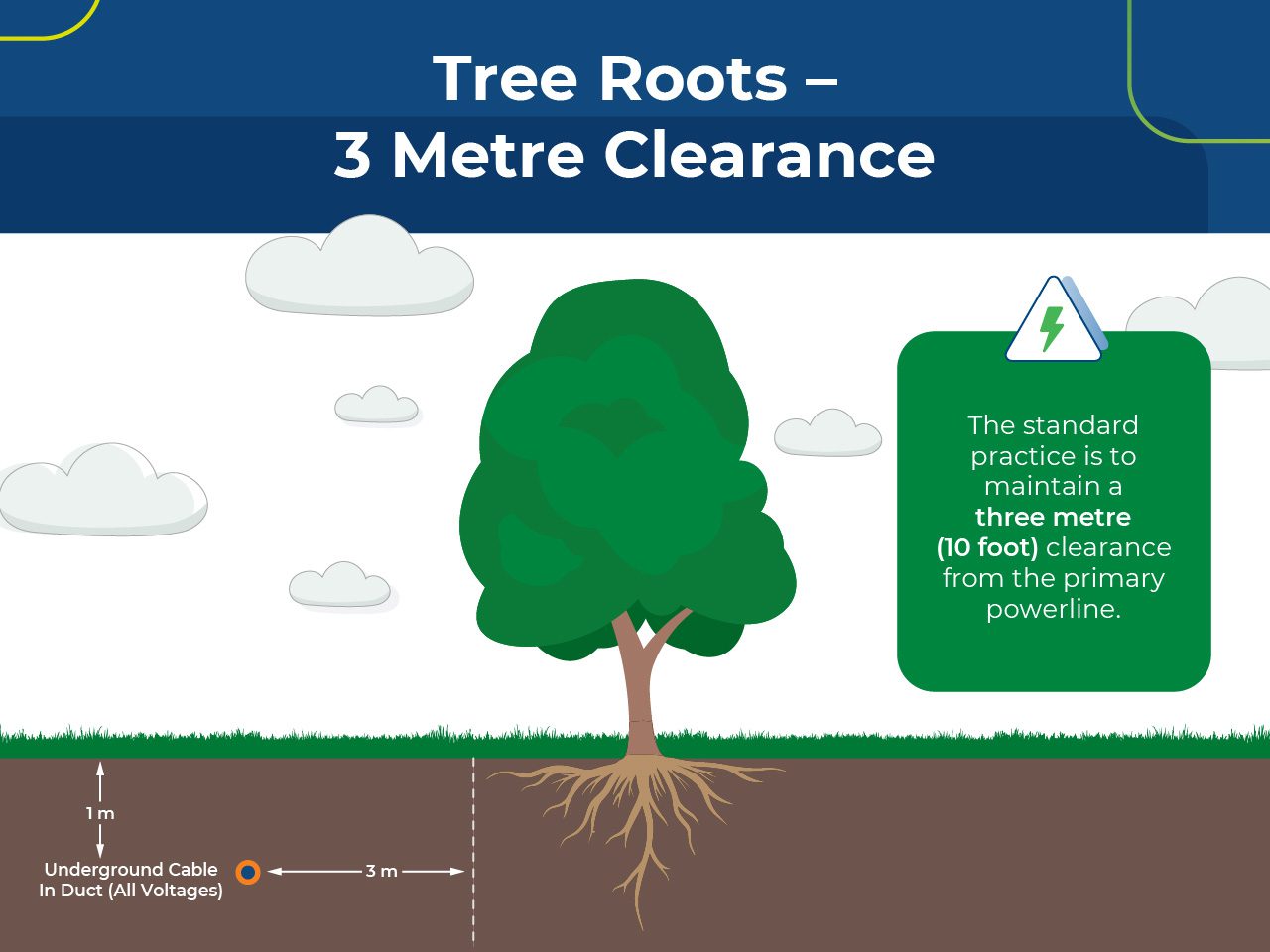
To safeguard underground electrical infrastructure and tree health, a minimum clearance of one metre (three feet) is needed between the edge of the tree’s root ball and the nearest underground cable or duct structure. This separation helps prevent damage to roots and ensures Burlington Hydro can safely access equipment, if needed. Where this distance cannot be maintained, a root deflector may be required to protect both the infrastructure and vegetation.
Since underground electrical lines can be buried at varying depths, it’s essential to arrange for an underground locate before planting. For your safety, contact Ontario One Call — available 24/7 at 1-800-400-2255 or submit a request online to schedule a free locate before you dig.
Tree planting or removal may require deep digging, which poses risks to underground infrastructure. If work must occur within one metre (three feet) of electrical lines, approved excavation methods — such as hand tools, vacuum, or pneumatic equipment — must be used to protect Burlington Hydro’s cables and ducts.
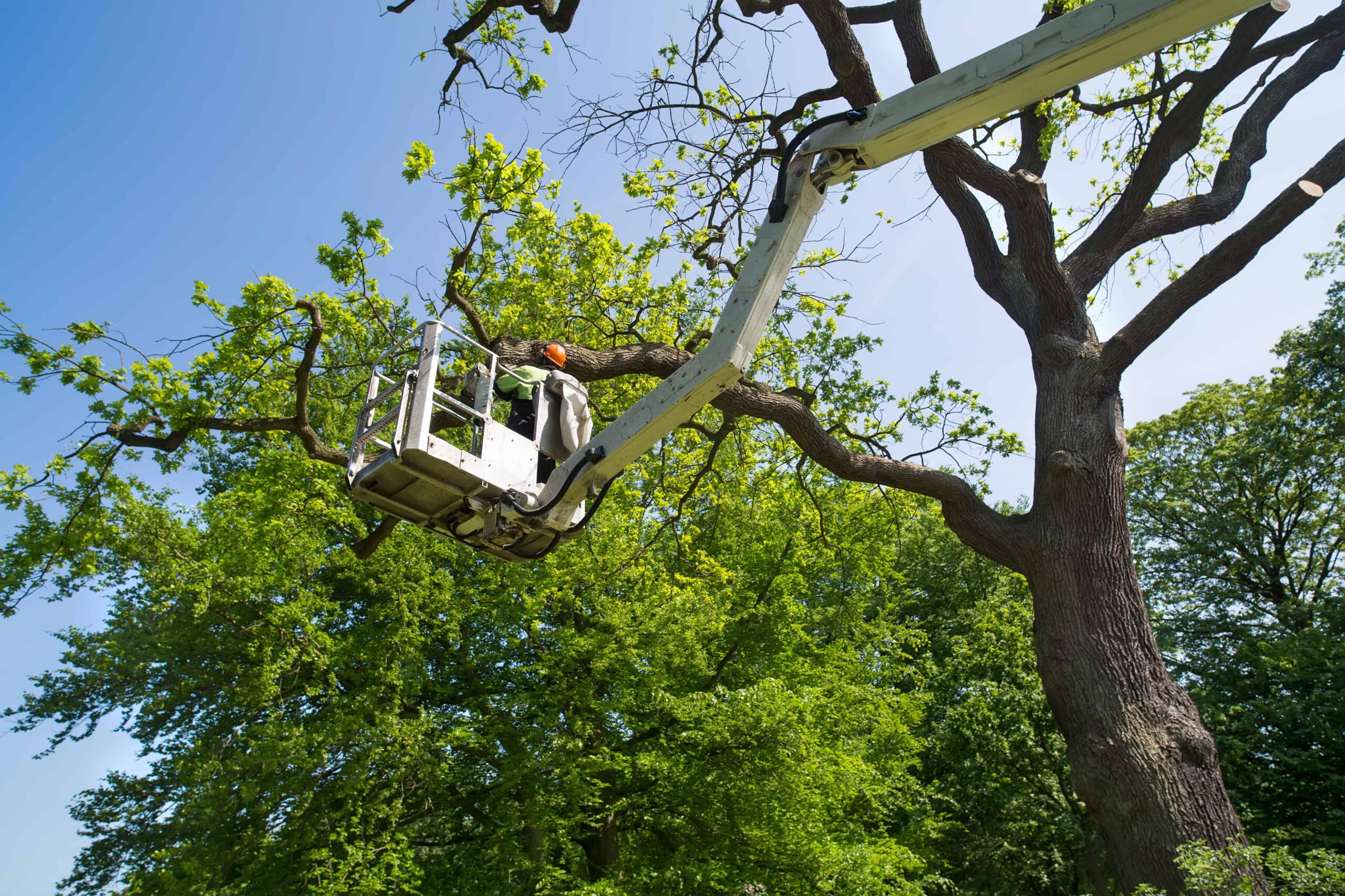
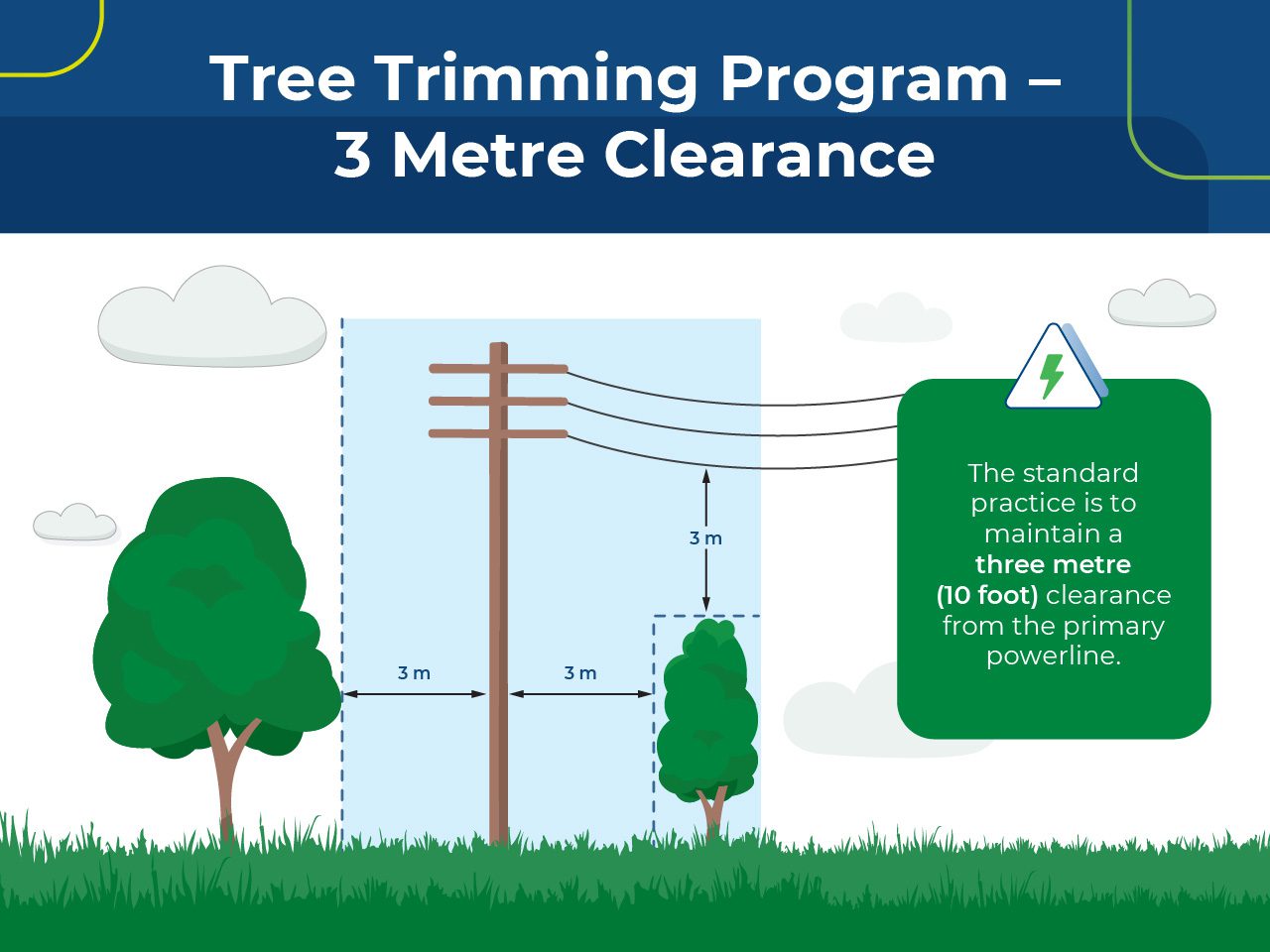
To maintain reliable service across Burlington, Burlington Hydro runs a proactive tree trimming program focused on trees located on municipal property. This comprehensive initiative, carried out by certified arborists, protects electrical infrastructure and helps minimize outages. Operating on a rotating three-year schedule, the program ensures every service area is regularly maintained, with a targeted clearance of three metres from primary powerlines.
By minimizing the risk of tree limbs coming into contact with powerlines — particularly during severe weather — the program reduces outages, enhances safety, and ensures crews have safe access to equipment for emergencies and inspections. As trees mature and weather events grow more unpredictable, this ongoing effort is essential to maintaining both the safety and reliability of Burlington’s electrical distribution system.
To perform necessary tree maintenance in line with the Electricity Act, 1998, Burlington Hydro and its contractors may require access to your property — including backyards — to trim or remove trees, branches, or other obstructions that could affect the safe and reliable operation of the distribution system.
Burlington Hydro covers debris cleanup as part of this service, with contractors tidying up work areas as they go. While most cleanup is completed promptly, occasional delays may occur due to unforeseen circumstances
Tree trimming companies often request power disconnection to safely work near powerlines.
For coordination or questions, email: [email protected]