
Find everything you need to view, manage, and pay your Burlington Hydro bill.
Learn about billing options, payment methods, and electricity price plans for both residential and commercial customers.
Home Account & Billing Residential Billing & Payments
Find everything you need to view, manage, and pay your Burlington Hydro bill.
Learn about billing options, payment methods, and electricity price plans for both residential and commercial customers.
✔ Same bill — easier to manage
✔ Anytime, anywhere access
✔ Secure and reliable
To register for MyBurlingtonHydro, you’ll need your account number and meter number.
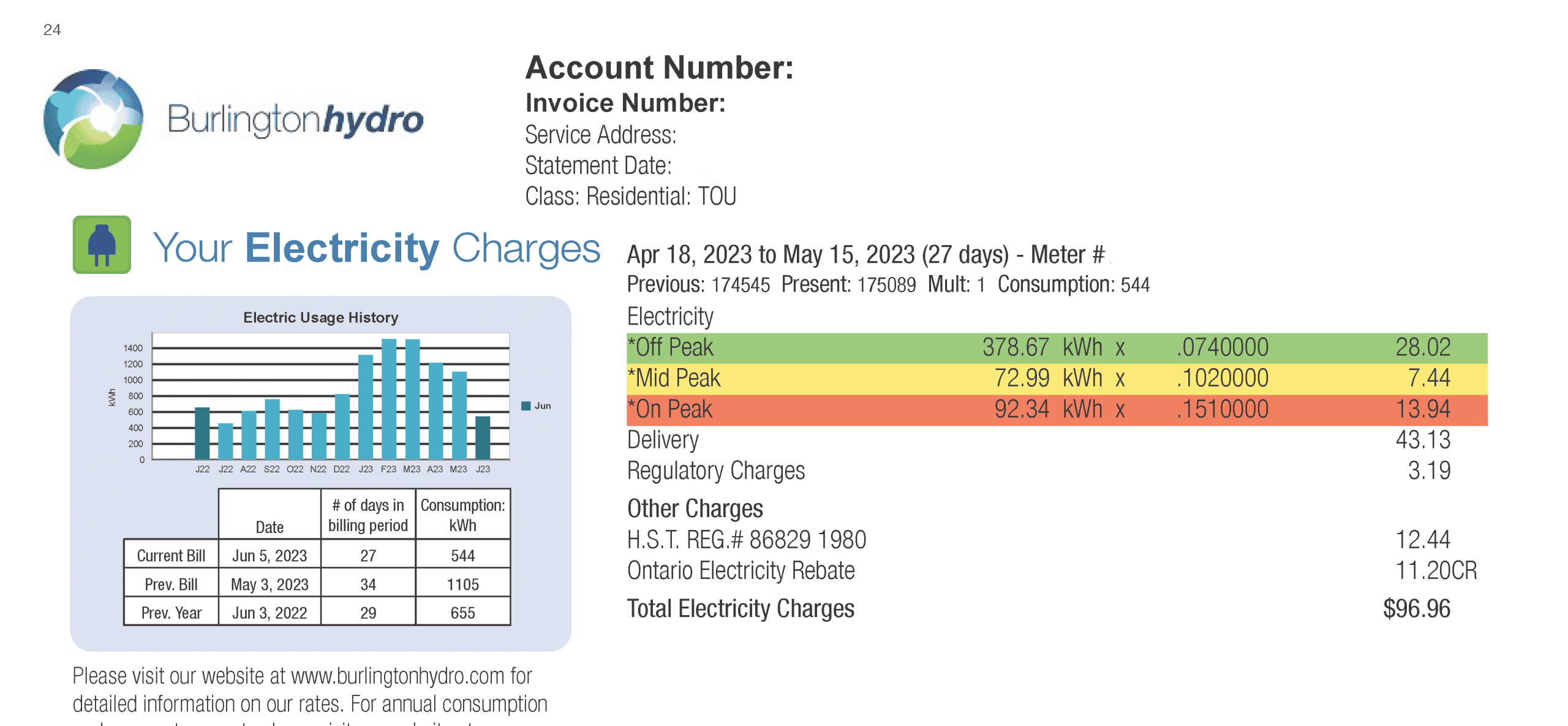
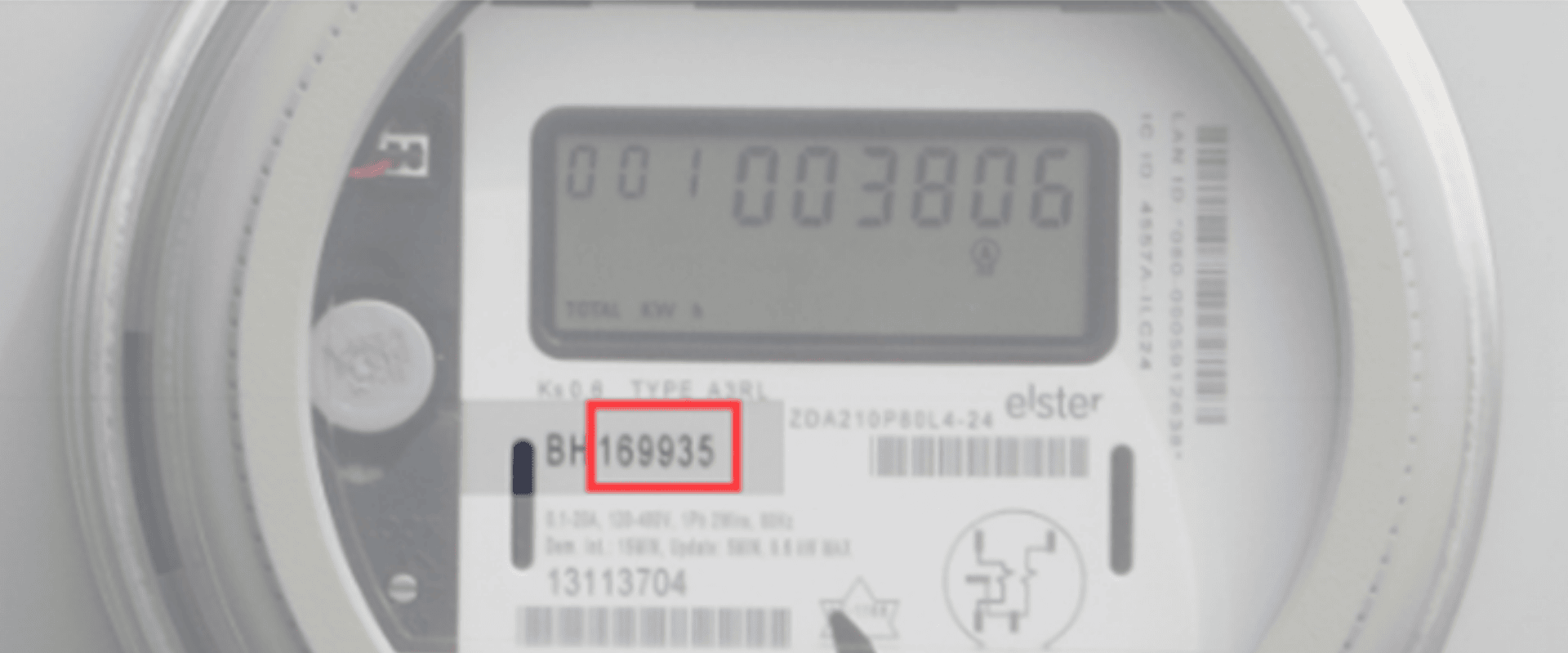
Your account number appears on your bill beside the Burlington Hydro logo, and your meter number is shown beside the bill date. If you don’t have your bill handy, you can find your meter number directly on your electricity meter—it’s the six digits to the right of “BH.”
Only check your meter if it’s safe to do so.
MyBurlingtonHydro makes managing your account simple, secure, and sustainable.
Making the switch is quick and easy:
Burlington Hydro will email you a notification with a link to view your bill each time a new bill is available for you to view.
Any customer who currently has an active account with Burlington Hydro can join this free service. This service is available to residential and small business customers.
Please see the ‘Getting Started with Online Billing‘ section above.
Yes. When you register with MyBurlingtonHydro and select “Sign-Up for Paperless Billing,” you will stop receiving a paper bill.
We offer several easy and secure ways to pay your bill — choose the option that works best for you:
Use the Ontario Energy Board (OEB) calculator to see what your total bill would look like under Time-of-Use (TOU), Ultra-Low Overnight (ULO), and Tiered prices, taking into account the other rates charged by Burlington Hydro (Delivery and Regulatory) and the Ontario Electricity Rebate.
Burlington Hydro collects payment on behalf of the organizations that keep Ontario’s electricity system safe and reliable. The charges on your bill are grouped into four categories: electricity costs, delivery costs, regulatory charges, and taxes.
Residential and small business customers can choose between Time-of-Use (TOU), Tiered, or Ultra-Low Overnight (ULO) price plans. Depending on how much electricity you use and when you use it, one price plan may suit you better than the others.
Time-of-Use (TOU) Pricing
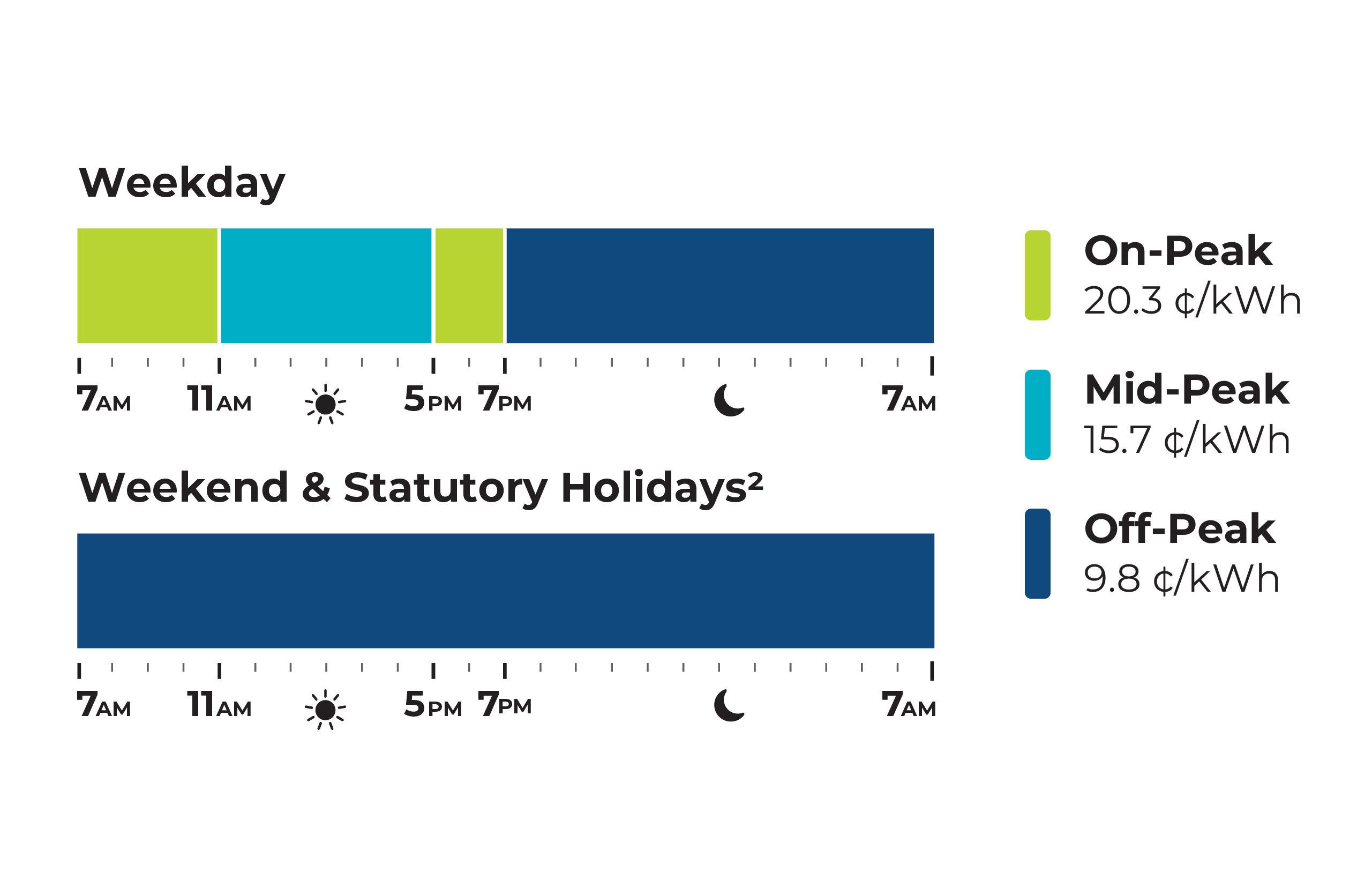
With TOU, the price depends on when you use electricity. This means you can help manage your electricity costs by shifting your usage to lower price periods when possible. There are three TOU price periods:
TOU price periods are different in the summer (May 1 – October 31) than they are in the winter (November 1 – April 30). No matter which season, on weekends and holidays, the lowest rates are in effect all day. View the holiday schedule for TOU pricing.
Tiered Pricing
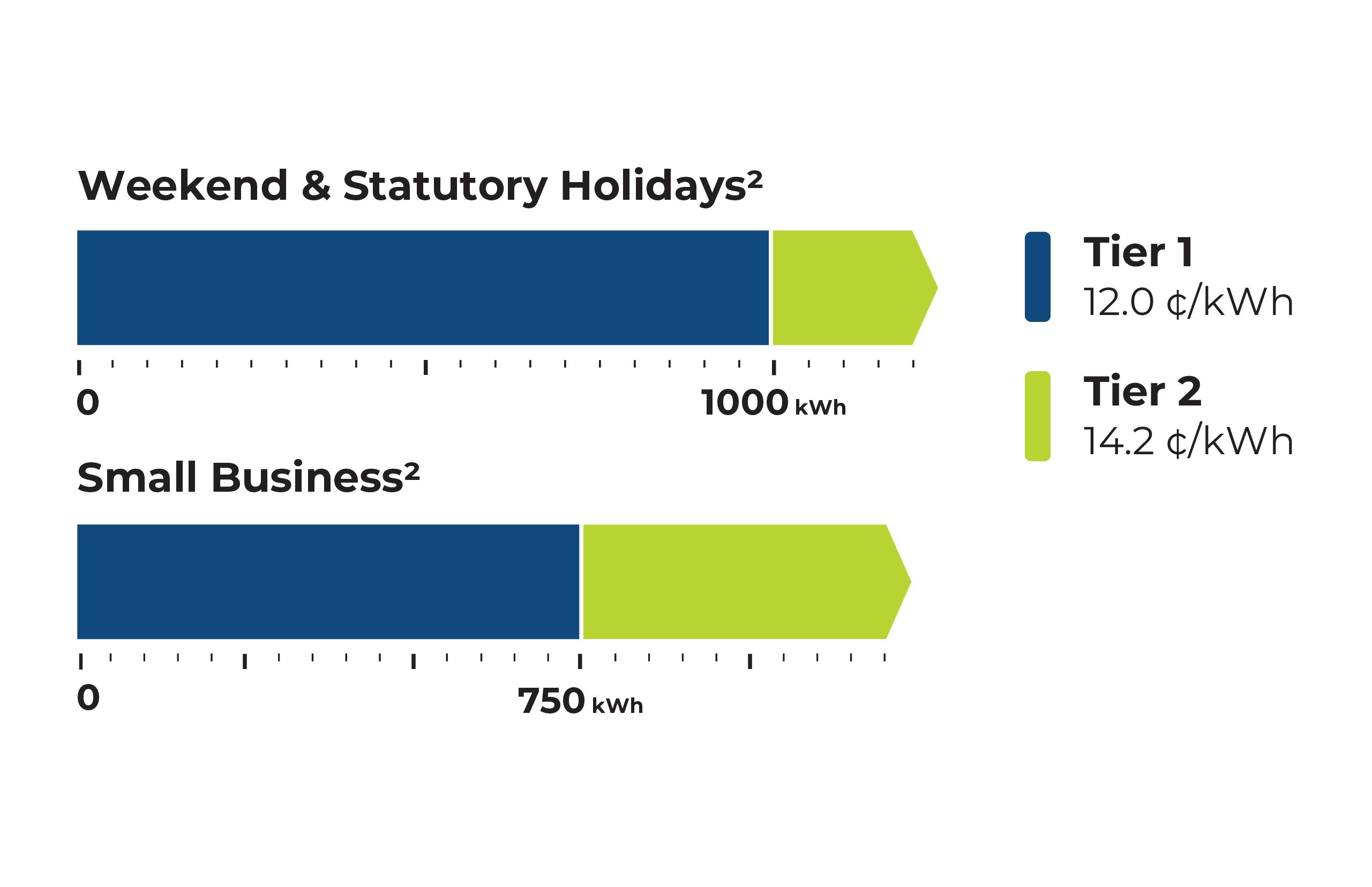
With Tiered pricing, your electricity rate depends on how much electricity you use in a month. You pay one price up to a set threshold and a higher rate for usage above it. The threshold changes seasonally to reflect typical usage patterns, such as higher heating needs in winter.
In the winter period (November 1 – April 30), the Tier threshold for residential customers is 1,000 kWh per month, so that during the heating season, households can use more power at the lower price. In the summer period (May 1 – October 31), the Tier threshold for residential customers is 600 kWh per month. The Tier threshold for small business customers is 750 kWh per month all year round.
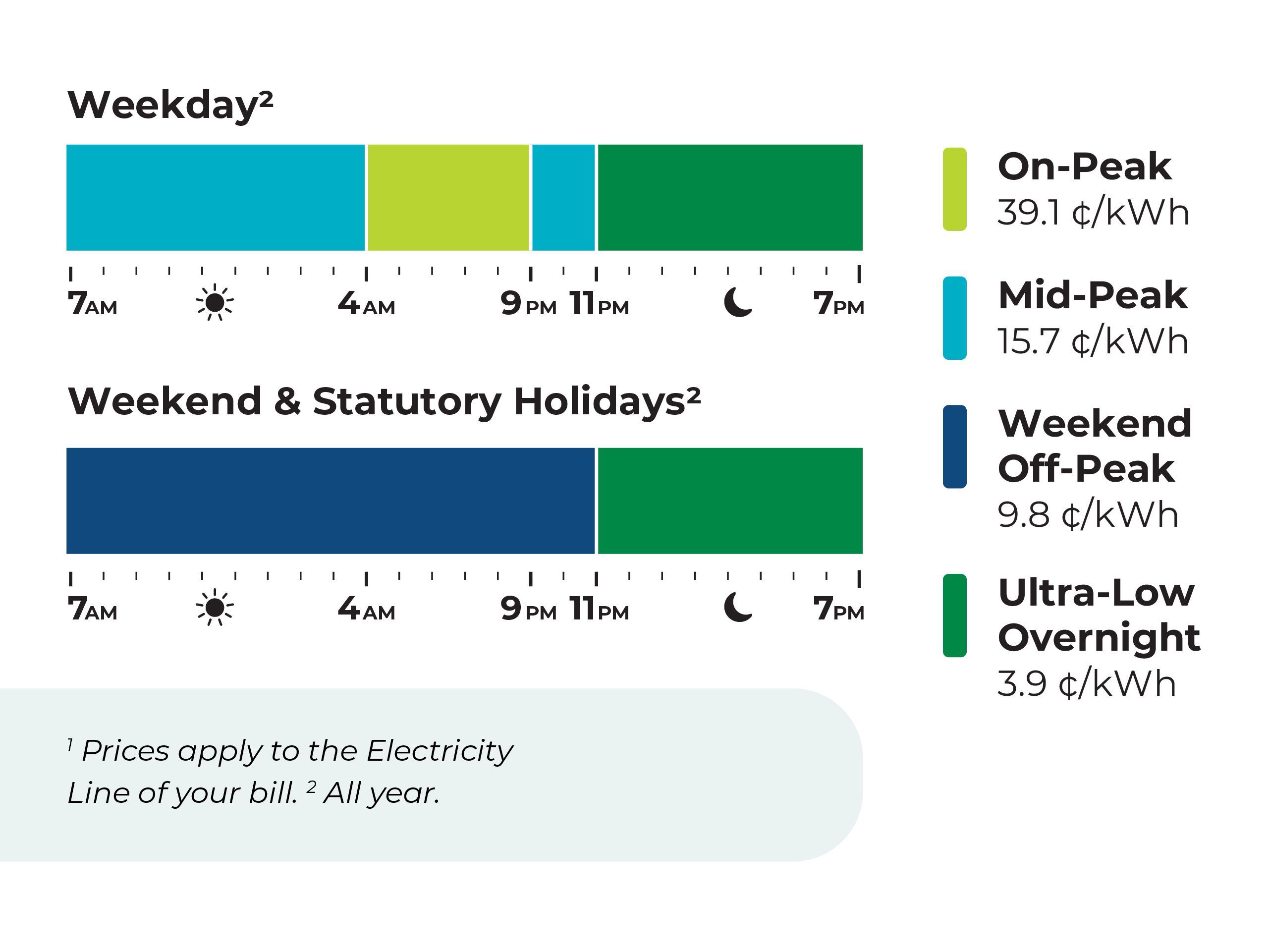
Ultra-Low Overnight (ULO) Pricing
The newest price plan – ULO – encourages shifting electricity use to overnight when provincewide electricity demand is lower, supporting the integration of EVs. With TOU, the price depends on when you use electricity. This means you can help manage your electricity costs by shifting your usage to lower price periods when possible. There are four ULO price periods:
The ULO price periods are the same in the summer as they are in the winter. View the Holiday Schedule for Ultra-Low Overnight pricing.

The Regulated Price Plan (RPP) lets eligible customers buy electricity at prices set by the Ontario Energy Board. Most residential and low volume customers are enrolled automatically.
Some customers must confirm their eligibility with Burlington Hydro to be placed on the RPP, including:
If you qualify and are not currently on the Regulated Price Plan, you can request enrolment by completing the self declaration form. Customers who are automatically enrolled do not need to apply.
The delivery charge covers the costs of delivering electricity from generating stations across Ontario to Burlington Hydro and then to your business. It includes the costs to build and maintain distribution lines, towers and poles, and to operate the local electricity system. The delivery charge also includes Hydro One transmission costs and system losses.
Before Burlington Hydro can make any changes to its rates it is required to seek approval from the OEB through a rate application process. The OEB reviews Burlington Hydro’s rate application independently in a public process and approves the rates Burlington Hydro can charge.
Regulatory charges are approved by the Ontario Energy Board (OEB) and support the operation of Ontario’s electricity system and wholesale market. These charges help fund services that keep the system reliable and efficient across the province.
Most regulatory charges are variable, meaning they increase or decrease based on your adjusted electricity usage during the billing period.
Burlington Hydro collects payment on behalf of the organizations that keep Ontario’s electricity system safe and reliable. The charges on your bill are grouped into four categories: electricity costs, delivery costs, regulatory charges, and taxes.
For medium and large businesses with a monthly peak demand of 50 kilowatts or more, the electricity category includes the wholesale cost, known as the Ontario Market Price, along with Global Adjustment.
The Ontario Market Price is determined by the Independent Electricity System Operator (IESO) and fluctuates based on supply and demand. To calculate the Ontario Market Price, the IESO establishes a base price that reflects the cost of supplying electricity. That base price is adjusted depending on the transmission system’s ability to deliver electricity throughout the province.
Global Adjustment is collected on behalf of the Independent Electricity System Operator (IESO) and covers the cost for providing both adequate generating capacity and conservation programs for Ontario. It applies to business customers who pay the Ontario Market Price and customers who have signed a contract with a licensed electricity retailer.
The delivery charge covers the costs of delivering electricity from generating stations across Ontario to Burlington Hydro and then to your business. It includes the costs to build and maintain distribution lines, towers and poles, and to operate the local electricity system. The delivery charge also includes Hydro One transmission costs and system losses.
Before Burlington Hydro can make any changes to its rates it is required to seek approval from the OEB through a rate application process. The OEB reviews Burlington Hydro’s rate application independently in a public process and approves the rates Burlington Hydro can charge.
Regulatory charges are approved by the Ontario Energy Board (OEB) and support the operation of Ontario’s electricity system and wholesale market. These charges help fund services that keep the system reliable and efficient across the province.
Most regulatory charges are variable, meaning they increase or decrease based on your adjusted electricity usage during the billing period.
If you own or operate a commercial electric vehicle (EV) charging station, you may be eligible for the new Electric Vehicle Charging (EVC) Rate.
The EVC Rate is an electricity delivery rate designed specifically for eligible EV charging stations in Ontario to better reflect the transmission costs of serving EV chargers with low load factors. It reduces the Retail Transmission Service Rates (RTSRs) paid by participating EV charging stations.
EV charging stations must meet all the following criteria to participate in the EVC Rate:
A ‘customer’ refers to the owner or operator of an EV charging station whose facilities are connected to or are intended to be connected to an electricity distributor’s distribution system. A customer is not the end-user of the EV charging service, such as the driver of a vehicle that uses the EV charging station.
The EVC Rate reduces the RTSRs that participating EV charging stations would otherwise pay. RTSRs are part of the electricity bill.
Participating customers will pay 17% of the RTSR that other customers in a distributor’s General Service 50 kW to 4,999 kW class will pay. In other words, if a customer’s base RTSR is $10/kW, it would instead pay $1.70/kW under the EVC Rate.
The EVC Rate better aligns the RTSRs paid by participating EV charging stations with the transmission system costs incurred to serve them.
You must submit an opt-in form to us. You can download the fillable pdf by clicking the button below.
The Ontario Electricity Rebate (OER) is provided to eligible customers, including:
The rebate is automatic for most customers and appears on bills as a separate line item.
Some account types require review and approval by Burlington Hydro to receive the Ontario Electricity Rebate (OER).
This applies to:
If your commercial account falls into one of these categories, you must apply to confirm eligibility.
Ontario regulation requires owners of large buildings (50,000 square feet or more) to report annual energy and water use to the provincial government by July 1 each year.
Burlington Hydro can provide the required energy and water consumption data for your property. To request this information, complete the EWRB Data Request Form and email the completed form to [email protected]. Please include “EWRB Request Form” in the subject line.
With the TOU price plan, there are three price periods: On-Peak, Mid-Peak and Off-Peak. On weekdays, the rate varies depending on the time of day. On weekends and statutory holidays, the off-peak rate applies. The periods change with the season to reflect changing usage patterns.
| Periods | Day of Week and Time | TOU Prices (c/kWh) | |
| Winter (November 1 - April 30) | Summer (May 1 - October 31) | ||
| Off-Peak | Weekdays 7 pm to 7 am, and all day weekends and statutory holidays | Weekdays 7 pm to 7 am, and all day weekends and statutory holidays | 7.6 cents per kWh |
| Mid-Peak | Weekdays 11 am – 5 pm | Weekdays 7 am to 11 am, and 5 pm to 7 pm | 12.2 cents per kWh |
| On-Peak | Weekdays 7 am to 11 am, and 5 pm to 7 pm | Weekdays 11 am to 5 pm | 15.8 cents per kWh |
With the Tiered price plan, you can use a certain amount of electricity each month at a lower price. Once that limit (called a threshold) is exceeded, a higher price applies. The threshold changes with the season to reflect changing usage patterns.
| Tiers | Threshold | Tiered Prices (c/kWh) | |
| Winter (November 1 - April 30) | Summer (May 1 - October 31) | ||
| 1 | Residential – first 1,000 kWh/month Non-residential – first 750 kWh/month | Residential – first 600 kWh/month Non-residential – first 750 kWh/month | 9.3 cents per kWh |
| 2 | Residential – for electricity used above 1,000 kWh/month Non-residential – for electricity used above 750 kWh/month | Residential – for electricity used above 600 kWh/month Non-residential – for electricity used above 750 kWh/month | 11.0 cents per kWh |
With the Ultra-Low Overnight (ULO) price plan, the price also depends on when you use electricity and further encourages shifting high electricity usage activities to lower-demand periods overnight. There are four rate periods which stay the same throughout the year.
| Periods | Day of Week and Time | TOU Prices (c/kWh) |
|---|---|---|
| Ultra-Low Overnight | Everyday 11 pm to 7 am | 2.8 cents per kWh |
| Weekend Off-Peak | Weekends and Holidays 7 am to 11 pm | 7.6 cents per kWh |
| Mid-Peak | Weekdays 7 am to 4 pm and 9 pm to 11 pm | 12.2 cents per kWh |
| On-Peak | Weekdays 4 pm to 9 pm | 28.4 cents per kWh |
Burlington Hydro bills on behalf of Halton Region for water, which appears on your bi-monthly electricity bill.
Electricity charges reflect the cost of the electricity you use, while delivery charges are the portion of your bill that Burlington Hydro keeps to operate, maintain, and improve the local electricity system.
Residential and small commercial customers pay electricity costs through the Regulated Price Plan, designed to provide stable pricing, encourage conservation, and ensure electricity costs reflect the prices paid to generators. The OEB sets Time-of-Use (TOU), Ultra-Low Overnight (ULO), and Tiered prices to recover the same forecasted average cost of supply for a typical consumer.
The OEB typically sets new prices in November, based on an estimate of how much it will cost to supply residential and small business customers on the Regulated Price Plan with the electricity that they are expected to use.
Delivery charges are the portion of your bill that Burlington Hydro keeps to operate, maintain, and improve the local electricity system that brings power to your home or business.
These charges cover things like:
Delivery charges for residential customers are fully fixed each month. All delivery rates are reviewed and approved by the Ontario Energy Board.
Yes—if you need help paying your bill, there are assistance programs available. You can find details on eligibility, available supports, and how to apply on our website.
Most Ontario households are on the Regulated Price Plan (RPP) by default. The RPP is not a single rate. It is a regulated framework set by the Ontario Energy Board (OEB) that determines how the electricity supply portion of your bill is priced.
Key points:
There is no guarantee you will save money by switching price plans. The total bill impact of switching will vary depending on how much electricity you consume in a month and when it is consumed during the day. A helpful tool – the OEB’s Bill Calculator - is available to compare your different pricing options.
To switch price plans, complete and submit a Price Plan Election Form to Burlington Hydro — there’s no deadline, and you can switch anytime.
Have a recent electricity bill handy for your account number. Once we receive your completed form, we’ll confirm within 10 business days when your new plan will take effect.
Your new pricing plan will start at the beginning of your next billing period (usually about 30 days) if your form is received at least 10 business days in advance. If it’s received later, the switch will take effect in the following billing period.
Yes. If you have chosen to switch price plans and later decide you want to go back, you can do so by completing and submitting another election form.
Most residential and small business customers on the Regulated Price Plan (RPP) can switch between price plans.
If you live in a condo or apartment with an individual meter and receive your bill from a company other than Burlington Hydro, you’re a customer of a unit sub-meter provider (USMP).
Note: Some customers currently on Tiered pricing may not be able to switch to TOU or ULO if their meters don’t support those plans.
Switching between TOU, Tiered, or ULO only affects the Electricity (supply) line of your bill.
It does not change:
Yes. All electricity distribution utilities, including Burlington Hydro, are required to inform all new Regulated Price Plan customers that they have a choice between TOU, Tiered or ULO prices when they set up their new accounts.
For commercial and industrial customers (GS > 50), the wholesale price for electricity appears as a separate line item on your bill. The final price on the bill is known as the Ontario Electricity Market Price, or the Ontario Price, for short. This price appears along with the Global Adjustment as the commodity charge on your monthly bills. While the average monthly Ontario Price appears on the IESO web site, Burlington Hydro calculates the final price that appears on your bill based on your business consumption. Learn more about pricing for commercial customers.
The Ontario Electricity Market Price is the average cost of electricity in Ontario’s wholesale market during your billing period, calculated based on when and how much electricity your business uses.
While the IESO publishes an average market price, the final price on your bill reflects:
Because prices fluctuate hourly, your electricity costs may vary from month to month depending on market conditions and usage patterns.
The Global Adjustment (GA) is a province‑wide charge collected on behalf of the IESO. It helps cover the cost of:
Commercial customers who pay the Ontario Electricity Market Price — including most GS > 50 kW customers — pay Global Adjustment as part of their electricity charge.
Delivery charges are the portion of your bill that Burlington Hydro keeps to safely deliver electricity to your business and maintain the local electricity system.
These charges cover:
For commercial customers, delivery charges are calculated differently depending on how your account is billed:
Contact our Customer Service team for assistance with billing, account access, or payment plans.